Old Insulation Removal & Spray Foam Retrofit in Wilmington, NC
Evaluation, preparation, and spray foam retrofit for existing Wilmington homes — where old insulation may need attention before a modern air-sealing and thermal-envelope upgrade.
Does Old Insulation Need to Be Removed Before Spray Foam?
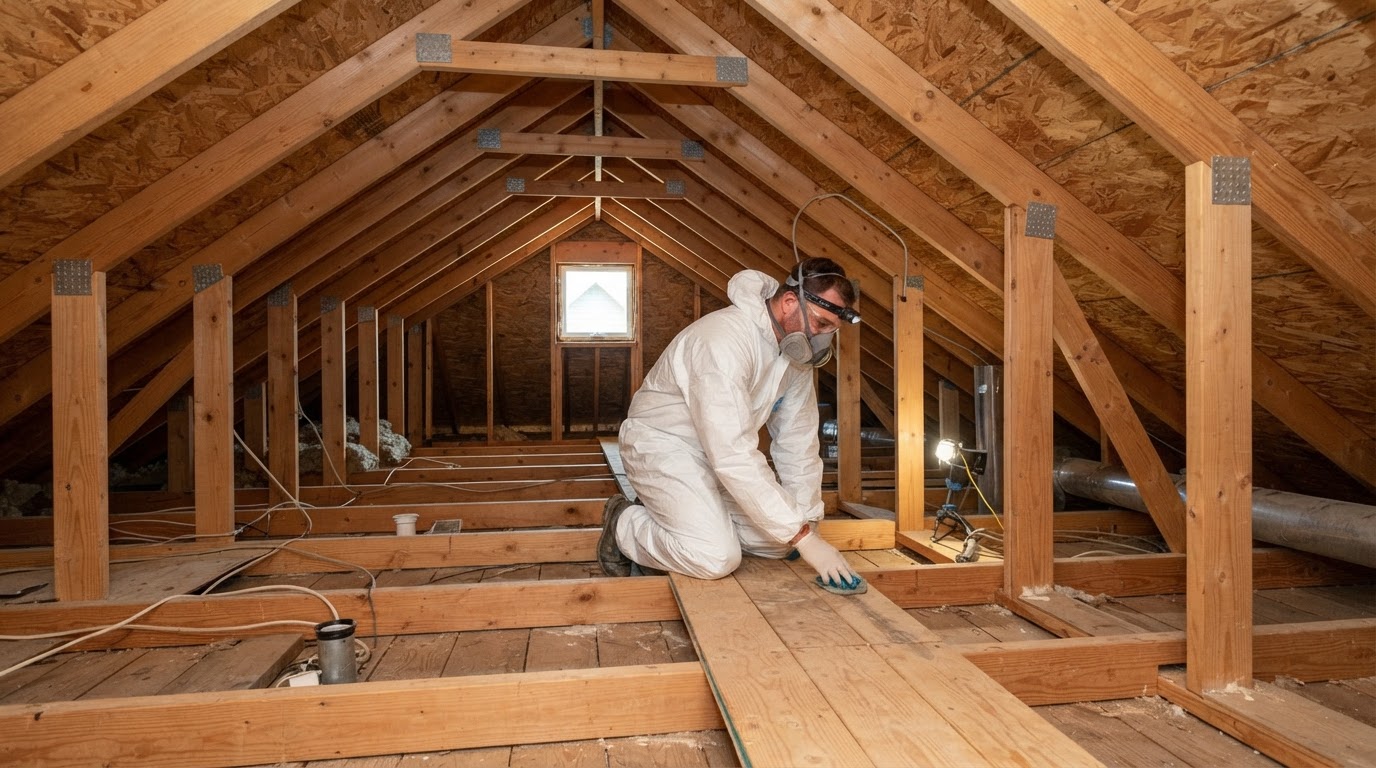
Not always. Whether old insulation is removed, repositioned, or left in place depends on its condition, the application location, the desired thermal boundary, access, moisture history, contamination concerns, the existing insulation type, and the overall project design. In some cases existing material can remain; in others, removal or repositioning is appropriate before a spray foam retrofit.
Ordinary examples include fiberglass batts, loose-fill insulation, older attic insulation, and crawl-space batts. Not every type is safely removable by the same contractor, and not every existing material needs to be removed before spray foam is applied. A project-specific evaluation determines whether removal or other preparation is appropriate for your home.
If there is evidence of active roof leaks, plumbing leaks, bulk-water intrusion, hazardous materials, severe contamination, or structural damage, those conditions may need to be addressed before insulation work. Potentially hazardous or contaminated materials may require specialized evaluation or remediation before insulation is applied. This page targets existing-insulation preparation and spray foam retrofit, but project requirements must be evaluated on site.
Existing Home Spray Foam Retrofit Options in Wilmington
A spray foam retrofit for an existing Wilmington home may involve removal in some areas, leaving existing material in place in other situations, changing where the thermal boundary is located, and preparing clean accessible surfaces. Wilmington's hot, humid summers and older housing stock make retrofit planning especially relevant for comfort and air-leakage reduction.
Attic Retrofits
Existing attic insulation can be evaluated and a roofline or attic-floor retrofit planned where appropriate.
Roofline Retrofits
Moving the thermal boundary toward the roofline may involve preparing the attic and roof deck.
Crawl Space Upgrades
Crawl-space insulation can be upgraded where framing and substrate conditions allow.
Renovation Projects
Open renovation walls and ceilings can be insulated during remodeling.
Garage Retrofits
Existing garages can be retrofitted with spray foam where framing is accessible.
Bonus Room Projects
Bonus rooms over garages can be upgraded as part of a retrofit.
A retrofit is not always a whole-home project. It may focus on the attic, roofline, crawl space, or a specific renovation area. The scope depends on access, existing conditions, and project goals. A project-specific evaluation determines what is practical for your home.
Choosing Spray Foam After Existing Insulation Is Addressed
After existing insulation is evaluated and any necessary preparation is complete, the spray foam product is chosen based on the application. Neither open-cell nor closed-cell is universally best — selection depends on the assembly, access, vapor considerations, and project goals.
Open-Cell in Retrofits
- Lower-density foam that expands significantly to fill irregular framing cavities
- Commonly considered for attic and roofline retrofits where appropriate
- Air-sealing function that can help reduce uncontrolled air leakage
- Sound-dampening characteristics that may be useful in occupied spaces
Closed-Cell in Retrofits
- Higher density and rigidity relative to open-cell
- Lower vapor permeance, useful in crawl spaces and moisture-sensitive assemblies
- May be considered where the assembly borders a humid or wet area
- Common in crawl-space, rim-joist, and select retrofit applications
Not sure which spray foam fits your project?
Call (910) 909-4411Old Insulation Evaluation and Spray Foam Retrofit Near Wilmington
An old insulation evaluation and spray foam retrofit project starts with reviewing existing insulation and project goals, then identifying accessible areas and existing insulation condition where possible. Because existing homes often contain older materials, conditions requiring another specialist are identified before insulation work.
1. Existing Insulation & Goals Discussion
We review the existing insulation, project goals, and the areas being considered for a retrofit.
2. Accessible Area Review
Accessible attic, roofline, crawl-space, or renovation areas are evaluated on site.
3. Existing Insulation Condition
Existing insulation type and condition are reviewed where possible to determine whether removal or preparation is appropriate.
4. Removal or Preparation Decision
We determine whether removal, repositioning, or leaving existing material in place is appropriate for the project.
5. Specialist Conditions
Conditions requiring another specialist — leaks, hazardous materials, contamination, structural damage — are identified before insulation work.
6. Preparation & Installation
Application areas are prepared and spray foam is installed where appropriate.
7. Final Review
Completed work and applicable project details are reviewed with the property owner.
Related Spray Foam Services
Want to talk it through first?
Old Insulation Removal & Spray Foam Retrofit FAQs
Considering an Insulation Upgrade for an Existing Wilmington Home?
If you are considering an insulation upgrade, a roofline retrofit, or an attic or crawl-space project for an existing home, we can help evaluate whether spray foam fits your overall building-envelope strategy. Property owners and builders are welcome to discuss their project.