Crawl Space Spray Foam Insulation in Wilmington, NC
Under-floor air sealing and rim joist insulation to help manage floor comfort and crawl-space air leakage in Wilmington homes.
How Spray Foam Crawl Space Insulation Works Near Wilmington
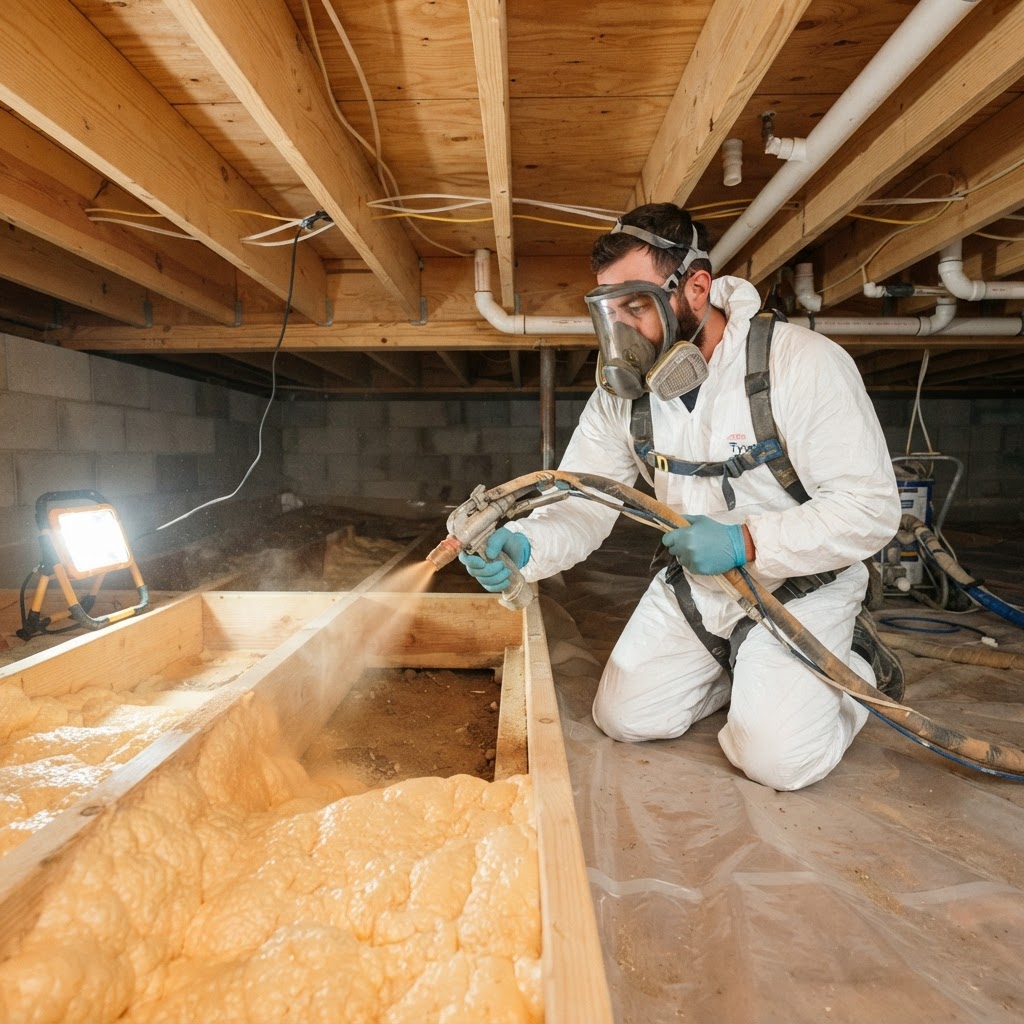
Crawl space spray foam insulation is the application of spray polyurethane foam to the under-floor assemblies above a crawl space — most commonly the floor system itself and the rim or band joist areas around the perimeter. The foam is sprayed as a liquid that expands to fill gaps, irregular framing, and utility penetrations, creating insulation combined with air-sealing coverage across the floor assembly. Wilmington Spray Foam Installation works with homeowners planning crawl-space insulation across the Wilmington area.
Rim and band joist areas are a frequent focus because they sit at the edge of the floor system and are a common source of uncontrolled air leakage. Spray foam conforms to these irregular areas in a way that is difficult to achieve with cut batts or board insulation. The result is a more continuous thermal and air barrier at the floor line, depending on the assembly and the extent of coverage planned.
Crawl-space design varies significantly between homes. Some crawl spaces are vented, some are enclosed, and some are conditioned. The appropriate insulation strategy depends on that design, the existing conditions, and the homeowner's goals. Spray foam is one tool within a crawl-space plan — it is not a substitute for a properly designed crawl-space system or for correcting water and drainage problems. A project-specific evaluation helps determine where foam fits.
Benefits of Crawl Space Spray Foam for Wilmington Homes
Wilmington's coastal humidity and warm, damp conditions make crawl spaces a common insulation and air-sealing focus. When properly specified and installed, crawl space spray foam can help reduce uncontrolled air leakage through the floor system and support more comfortable floors above. It is important to distinguish insulation from water management — spray foam does not waterproof a crawl space.
Reduced Air Leakage
Expanding foam can help seal rim joist, band, and floor penetrations that allow uncontrolled air movement through the floor line.
Floor Comfort
Sealing and insulating the floor assembly can help reduce cold or drafty floors above the crawl space, depending on the assembly.
Thermal Boundary
A continuous foam layer at the floor line can support improved thermal-envelope continuity for the home.
Hard-to-Reach Gaps
Foam conforms to irregular rim joist and floor framing that is difficult to seal with conventional insulation.
Coastal Humidity Context
Humid southeastern NC air interacts with crawl-space ventilation; envelope planning should account for moisture.
Retrofit Potential
Existing homes can often be retrofitted at the floor line where access and assembly conditions allow.
Spray foam is an insulation and air-sealing product, not a water-management solution. Active plumbing leaks, bulk water intrusion, drainage problems, and structural damage require separate correction. Foam can be part of a properly designed crawl-space strategy, but it does not fix water issues on its own.
Where Crawl Space Spray Foam Is Used Around Wilmington
Crawl space spray foam is applied to specific under-floor assemblies rather than sprayed randomly beneath the house. The applications below are common across Wilmington-area homes, though not every crawl space uses foam in every area listed.
Floor Systems
The underside of the floor framing above the crawl space, where foam helps insulate and air-seal the floor assembly.
Rim & Band Joists
The perimeter framing at the edge of the floor system — a common source of air leakage that foam conforms to well.
Foundation Walls
In some enclosed or conditioned crawl-space designs, foam may be applied to interior foundation walls where appropriate.
Utility Penetrations
Gaps around plumbing, wiring, and duct penetrations where foam helps seal air paths between the crawl space and living space.
Existing Homes
Retrofit applications where old fiberglass has fallen or deteriorated and the floor line is accessible.
New Construction
Pre-floor application during new builds when the floor system and rim joist areas are fully accessible.
What Should Be Evaluated Before Crawl Space Spray Foam
Crawl spaces involve moisture, framing access, and existing insulation conditions that all interact. Before spray foam is installed, several project-specific factors should be reviewed so the right product is applied to the right assembly.
- Crawl-space design — vented, enclosed, or conditioned
- Existing insulation type and condition (fiberglass batts, loose fill)
- Signs of active plumbing leaks or bulk water intrusion
- Ground moisture and drainage conditions
- Rim joist and band board access and condition
- Floor framing type and cavity depth
- Mechanical systems, ductwork, and plumbing runs in the crawl space
- Ventilation and combustion air requirements
- Whether existing insulation needs removal or can remain
- Open-cell vs. closed-cell suitability for the assembly
Crawl Space Spray Foam Installation Near Wilmington: What to Expect
A crawl space spray foam project follows a high-level process that accounts for access, existing conditions, and moisture. The steps below are general — actual sequencing depends on the crawl space and project conditions.
1. Project Discussion
We review your crawl space, floor comfort concerns, and any moisture or draft issues you have noticed.
2. Application Area Assessment
The floor system, rim joist areas, access, and crawl-space design are evaluated on site.
3. Conditions Check
We check for obvious conditions requiring attention, such as active leaks or bulk water, before recommending insulation.
4. Foam & Application Planning
Open-cell, closed-cell, or another appropriate approach is selected based on the assembly and moisture strategy.
5. Preparation & Application
The work area is prepared with attention to access and ventilation, then spray foam is applied to the planned assemblies.
6. Final Review
Completed work and applicable project details are reviewed with the homeowner.
Open-Cell vs. Closed-Cell Spray Foam in Crawl Spaces
Both open-cell and closed-cell spray foam are considered for crawl spaces, and neither is universally correct. The choice depends on density, rigidity, vapor permeance differences, assembly design, moisture considerations, and applicable code or design requirements. A project-specific evaluation is the right way to select between them.
Open-Cell in Crawl Spaces
- Lower-density foam that expands to fill irregular floor and rim joist cavities
- Air-sealing function that can help reduce floor-line air leakage
- Higher vapor permeance relative to closed-cell products
- Selection depends on crawl-space design and moisture strategy
Commonly considered where vapor control is not the primary objective and the assembly design allows it.
Closed-Cell in Crawl Spaces
- Higher density and rigidity relative to open-cell
- Lower vapor permeance, which may matter in moisture-sensitive assemblies
- Often considered for rim joist and floor applications where durability is a concern
- Selection depends on assembly design and code requirements
Frequently selected for rim joist areas and moisture-sensitive crawl-space assemblies.
Crawl Space Building Considerations in Wilmington, NC
Crawl spaces in coastal southeastern North Carolina involve humidity, ground moisture, and existing insulation conditions that influence the insulation approach. The factors below are commonly reviewed when planning crawl space spray foam.
Crawl-Space Design
Vented, enclosed, and conditioned crawl spaces require different insulation strategies. The design drives product and placement decisions.
Humidity & Ground Moisture
Wilmington's coastal humidity and ground moisture interact with crawl-space air. Insulation planning should account for moisture, not ignore it.
Existing Insulation
Old fiberglass batts may have fallen, absorbed moisture, or deteriorated. Condition determines whether removal is needed before foam.
Rim Joist Access
Rim and band joist areas are a key air-leakage path. Access and framing condition determine whether foam can be applied effectively.
Plumbing & Mechanicals
Ductwork, plumbing runs, and mechanical equipment in the crawl space interact with the insulated envelope and should be considered together.
Water vs. Insulation
Spray foam is not a water-management solution. Active leaks, drainage problems, and bulk water must be corrected separately.
Why Professional Crawl Space Installation Matters
Crawl space spray foam installation is a professional trade that requires correct material selection, proper equipment, and careful application in a confined, moisture-prone environment. Professional planning is especially important beneath a home.
Correct Material Selection
Choosing open-cell or closed-cell depends on the crawl-space design, moisture strategy, and assembly — not a one-size-fits-all product.
Moisture Awareness
A professional evaluation identifies active water or drainage issues that must be corrected before insulation is applied.
Application Consistency
Professional application helps ensure consistent thickness and coverage across rim joist and floor framing in tight access.
Surface Preparation
Substrates must be clean, dry, and suitable for adhesion, particularly where old insulation has been removed.
Equipment & PPE
Professional two-component spray foam requires specialized equipment and personal protective equipment during application.
Ventilation During Installation
Proper ventilation protects the living space above during and after application in a confined crawl space.
Common Reasons to Consider Crawl Space Spray Foam
Homeowners often explore crawl space spray foam when floor comfort, air leakage, or existing insulation condition becomes a concern. These conditions can be reasons to evaluate the insulation system.
- Floors above the crawl space feel cold, drafty, or uncomfortable
- Existing fiberglass batts have fallen, sagged, or deteriorated
- Rim joist areas show gaps, air leakage, or missing insulation
- A crawl-space renovation or encapsulation project is being planned
- A new home is under construction and the floor system is accessible
- Drafts or air leakage from the crawl space affect living areas
- Old insulation shows signs of moisture exposure
- A home addition is being built with a new crawl-space foundation
Serving Wilmington & Southeastern North Carolina Homes
Wilmington Spray Foam Installation serves homeowners planning crawl space spray foam insulation across Wilmington and surrounding southeastern North Carolina communities. From older homes with deteriorated fiberglass to new construction with accessible floor systems, crawl-space projects are planned around each home's design, moisture conditions, and comfort goals.
Wilmington's hot, humid summers and coastal conditions mean crawl-space humidity, ground moisture, and air leakage can interact with floor comfort and building-envelope performance. Spray foam can help reduce uncontrolled air movement at the floor line, but insulation, air sealing, moisture management, and drainage should be considered as parts of the overall crawl-space system. A project-specific evaluation helps determine the right approach for your home.
Crawl Space Spray Foam Insulation FAQs
Discuss Your Wilmington Crawl Space Insulation Project
If cold floors, drafts, or crawl-space air leakage are concerns, we can help plan the right spray foam approach for your home. We also check for conditions that need attention before any insulation is applied.